
AEI Regulation Readiness Intensive™
Stabilizing Systems Before Structural Design
Designed for leadership teams preparing to implement structural or equity-centered change.
Take this free 5-question assessment to see where your organization currently stands. It takes 2 minutes and gives you clarity.
Where does your organization stand in Q4?

Is your system and structure stable enough for change?
Regulation Readiness Intensive™
Regulation at the systems level refers to an organization’s capacity to absorb feedback, adapt without collapse, and sustain implementation under pressure. It reflects the overall stability of a system—its ability to address and reduce maternal and child health inequities while sustaining long-term outcomes for children and families.
The Regulation Readiness Intensive™ is designed to assess whether a system is structurally prepared to undertake equity-centered change. This diagnostic audit evaluates the organization’s capacity to implement and sustain interventions without breakdown.
At its core, this intensive answers two critical questions:
Can this organization implement equity-centered change without collapse?
What structural conditions within the system and workflow are driving instability in programming and intervention?
Core Domains Assessed
The Regulation Readiness Intensive™ evaluates system stability across five core domains that determine an organization’s capacity to implement and sustain equitable change:
1. Structural Capacity
The system’s ability to hold and carry implementation, including clear decision authority, aligned resources, and protected capacity for execution.
2. Leadership & Governance Alignment
The extent to which equity is structurally embedded in leadership priorities, decision-making processes, and accountability systems.
3. Workforce Stability & Psychological Bandwidth
The organization’s ability to sustain its workforce, including manageable workloads, supervision structures, and the capacity to engage in change without burnout.
4. Data & Feedback Infrastructure
The presence of systems that capture, disaggregate, and utilize data in real time to inform decisions, monitor processes, and detect inequities.
5. Community Integration & Trust Signals
The degree to which the system is meaningfully connected to the communities it serves, including representation, accessibility, and culturally aligned practices.
These domains provide a comprehensive view of whether a system is sufficiently regulated to sustain implementation or requires stabilization before redesign.
What you receive
The Regulation Readiness Intensive™ is a structured diagnostic process designed to assess system stability and determine readiness for equity-centered implementation.
Deliverables include:
Executive Leadership Interview (90 minutes)
A structured conversation to assess system pressures, decision-making, and leadership alignment
Targeted Document Review
Analysis of key organizational materials to evaluate structural alignment and operational realities
5-Domain Regulation Scorecard Analysis
A comprehensive assessment of system capacity across core domains, identifying strengths and points of instability
Executive Structural Integrity Profile™
A synthesized analysis of system functioning, highlighting misalignments, risks, and leverage points
Implementation Readiness Threshold Determination
A clear determination of whether the system is prepared to implement change or requires stabilization
60-Minute Executive Debrief
A focused session to review findings, clarify implications, and align on next steps
Stabilization Pathway Recommendation (if indicated)
Targeted guidance to strengthen system stability prior to redesign or implementation
This intensive prevents redesign from collapsing under systemic strain by ensuring the foundational conditions for implementation are in place. It re-centers equity within the infrastructure of program planning and execution—rather than positioning it solely as an outcome.
Based on the findings, organizations move forward through one of two pathways:
If the system is below the readiness threshold
We partner with your organization to stabilize structural gaps and address areas of fracture through a targeted 6–12 week engagement. This phase focuses on strengthening system capacity prior to implementation and concludes with a follow-up assessment.
If the system is at or above the readiness threshold
Organizations can continue into program design, research, implementation, and evaluation support to ensure interventions are executed effectively and equitably.
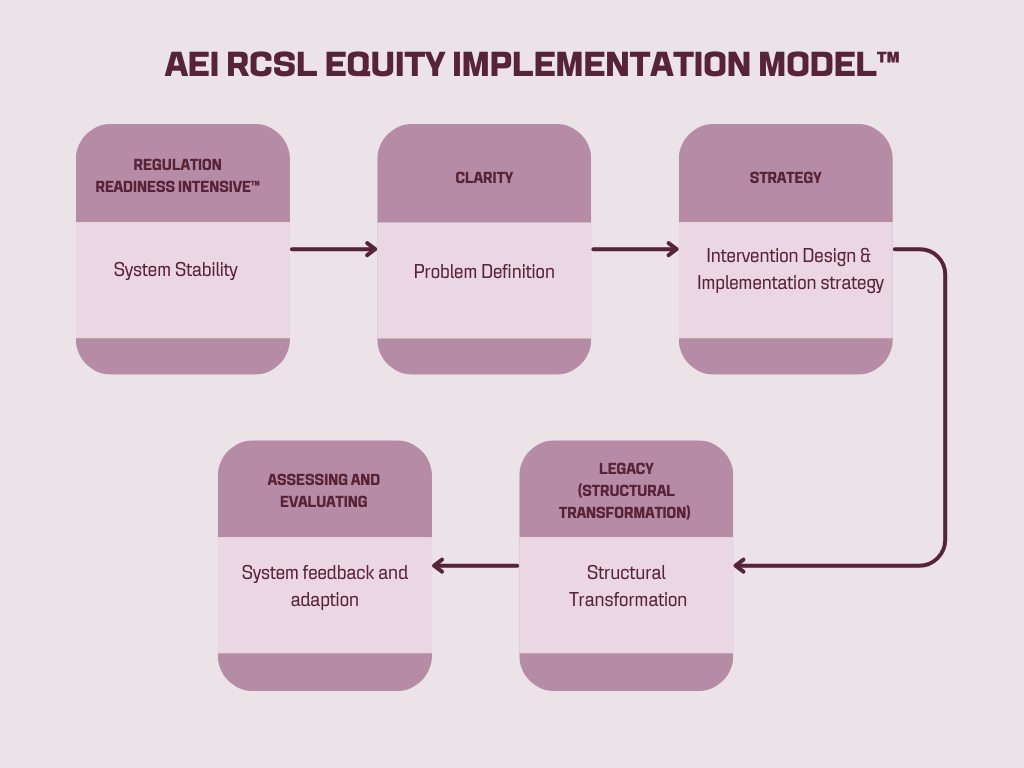
In both pathways, organizations move through the Regulation–Clarity–Strategy–Legacy (RCSL) implementation methodology—either to stabilize the system for implementation or to successfully design and sustain equity-centered interventions.